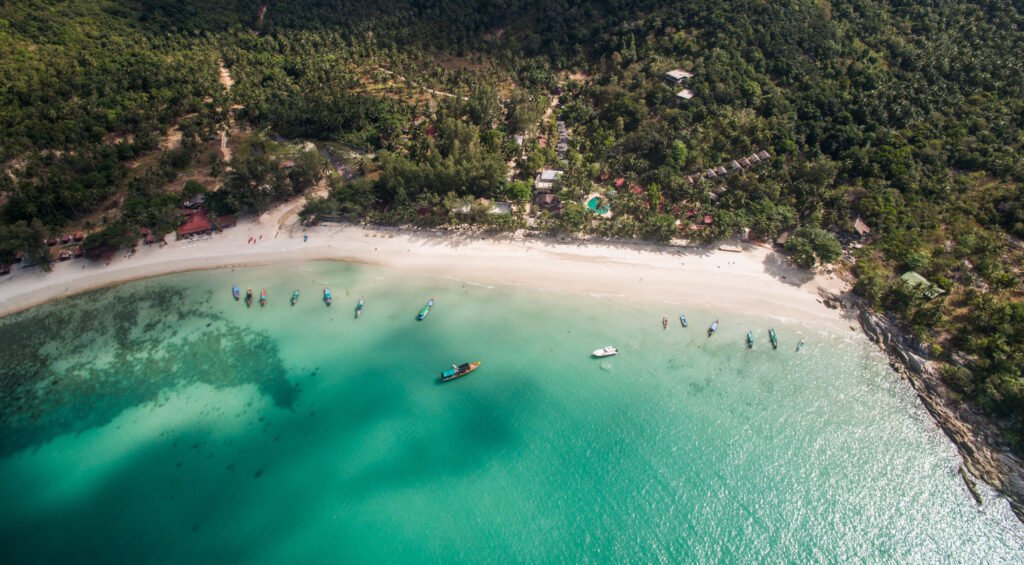
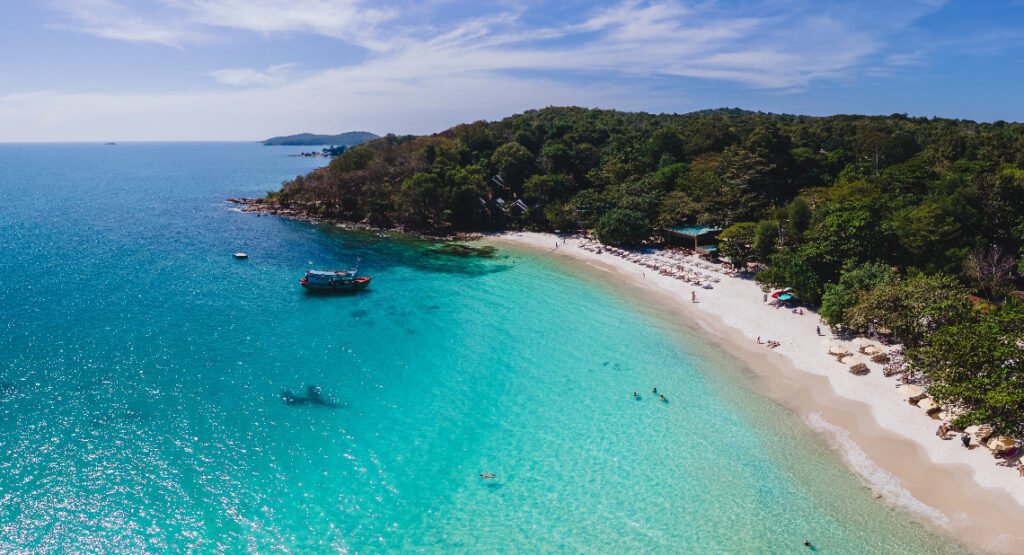
Where are the Most Beautiful Beaches in Thailand?
Thailand has almost 2,000 miles of coastline and more than a thousand islands, which means that producing a definitive list of its most beautiful beaches is the kind of task that invites debate. Leave one out and someone will tell you why it should have been included. Put one in and someone else will tell you it was better ten years ago. Given that, here are fifteen beaches that are genuinely hard to argue with — spread across both coasts, and ranging from world-famous to barely discovered.
So here is the list — in no particular order — of the 15 most beautiful beaches in Thailand.
Silver Beach, Koh Samui — Surat Thani
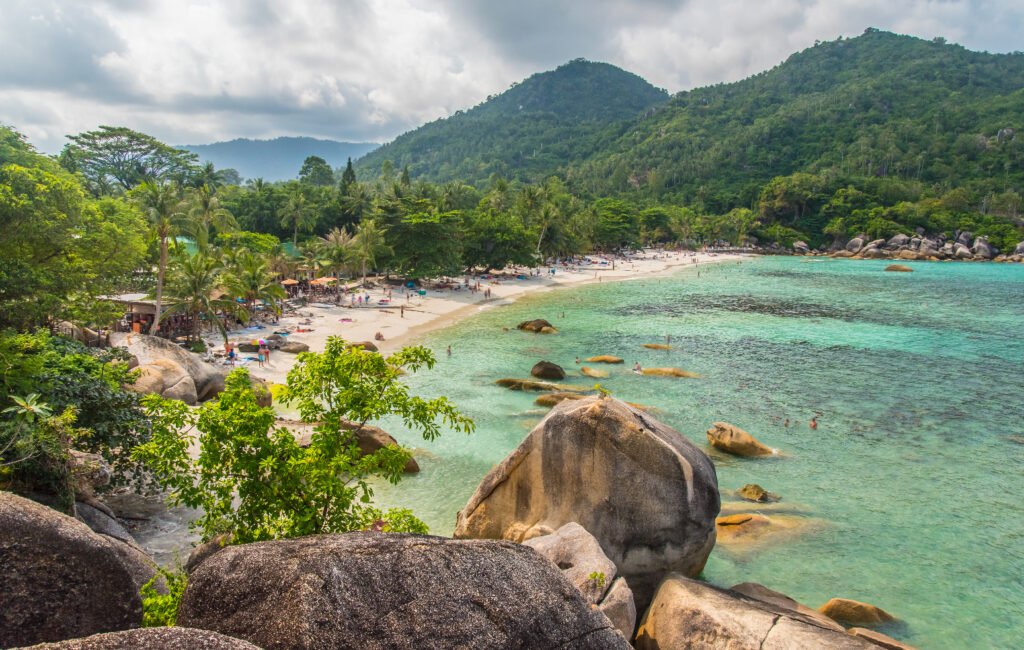
Koh Samui is large enough to absorb its own popularity, and Silver Beach is the proof. Tucked between the busier stretches of Chaweng and Lamai on the east coast, it is a small, horseshoe-shaped bay that most people drive past without stopping. The water is exceptionally clear even by Thai standards, the sand is the colour of its name, and the handful of beach bars that line the back of the bay keep things just lively enough without tipping into chaos. For a beach this close to Samui’s main tourist strip, the relative peace here is refreshing.
Freedom Beach, Phuket
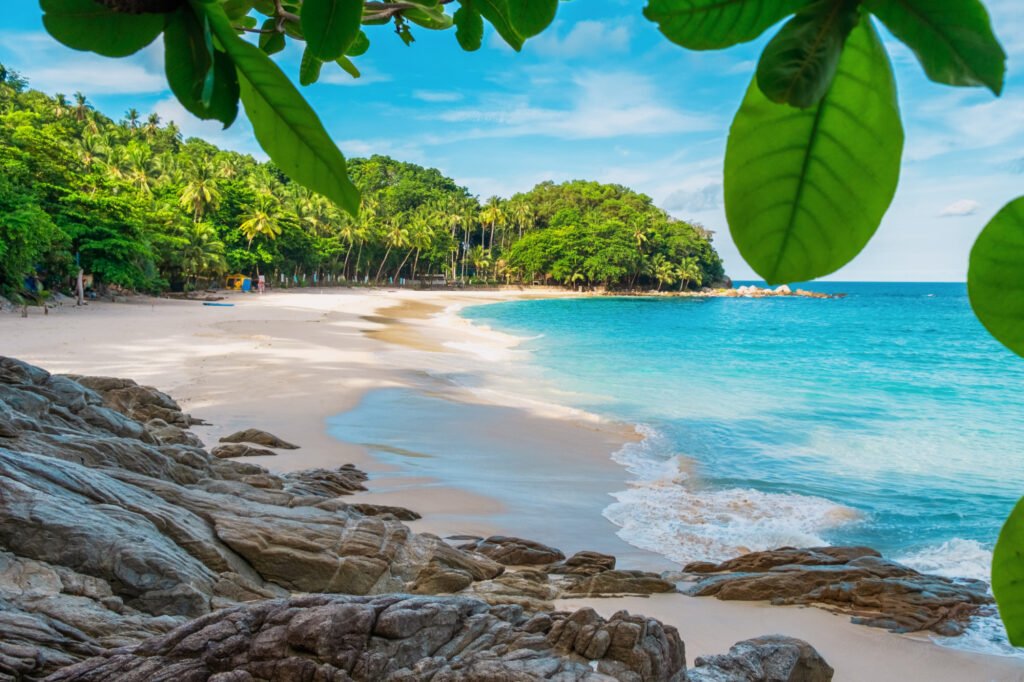
Freedom Beach is just ten minutes by longtail boat from the chaos of Patong — a fact that takes some believing once you’re standing on it. A 300-metre expanse of white sand sits between jungle-covered hills and the bright blue waters of the Andaman Sea. Getting here requires a little effort: either a 15-30 minute trek through lush jungle from the road above or a longtail boat from the southern end of Patong Beach. That effort is the whole point though, as it’s like a different world here. Arrive early and you may have it almost entirely to yourself. Freedom Beach is Phuket’s argument that it still has something genuinely wild left to offer — you just have to be willing to work a little for it.
Donald Duck Bay, Similan Islands – Phang Nga
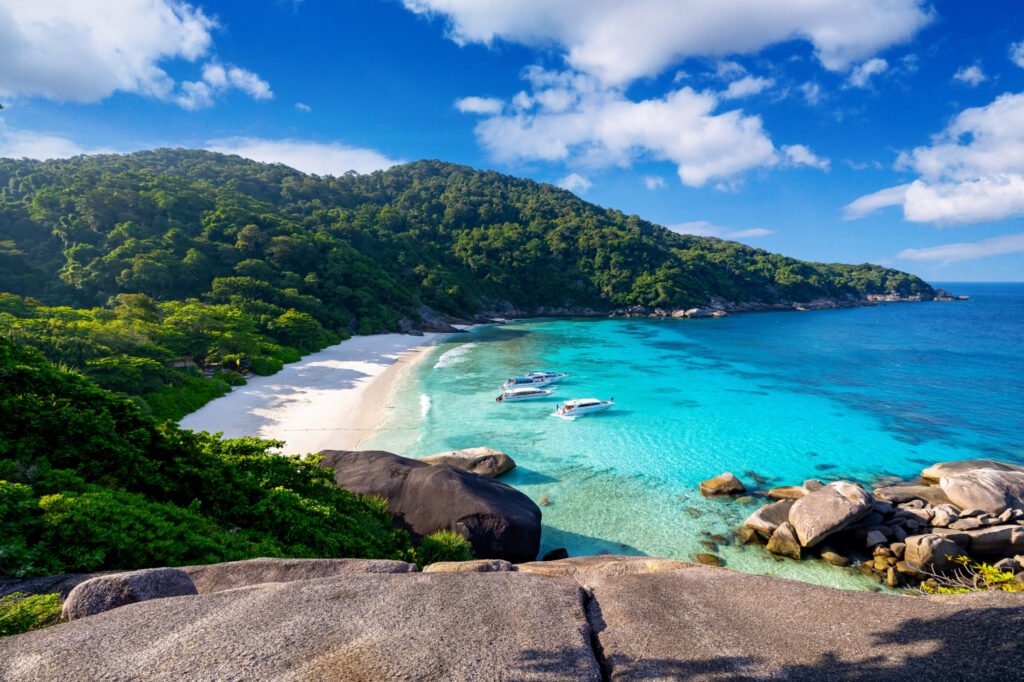
Donald Duck Bay takes its name from an iconic shape of rocks that overlook it, and is without a doubt one of the most beautiful beaches in Thailand. Part of a National Park, the natural beauty here is well protected and preserved — there’s excellent coral close to the shore, the snorkelling is fantastic, and the beaches across the Similan archipelago feel genuinely untouched. Getting here requires a boat from Khao Lak and the islands are only accessible from October to May — the national park closes during monsoon season to allow the ecosystem to recover. That enforced inaccessibility is part of what keeps it special. The Similans are what Thailand’s most famous beaches might have looked like fifty years ago, before the boats started arriving.
Railay Beach, Krabi
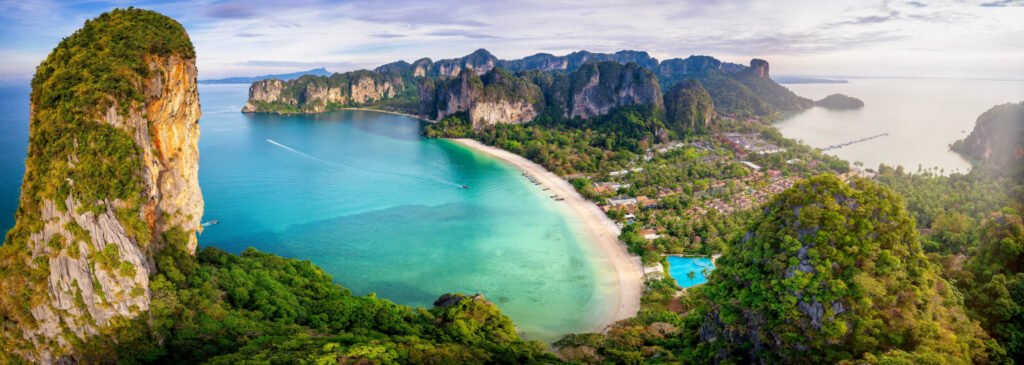
Isolated from the mainland by massive limestone cliffs, Railay Beach (also known as Railay West) can only be reached via a short longtail boat ride from nearby Ao Nang. Although still busy, this short journey acts as a natural filter, keeps the number of day-trippers down and gives the beach a sense of occasion that others on this list can’t quite match. Hemmed in by craggy limestone cliffs and surrounded by dense rainforest, Railay offers everything from basic bungalows to sprawling luxury resorts, and draws visitors who want to snorkel, cliff jump, or simply sit and stare. Railay West is the best beach for swimming; Phra Nang (below), a short walk away, is arguably the most beautiful spot on the peninsula. Visit both.
Phra Nang Beach, Krabi
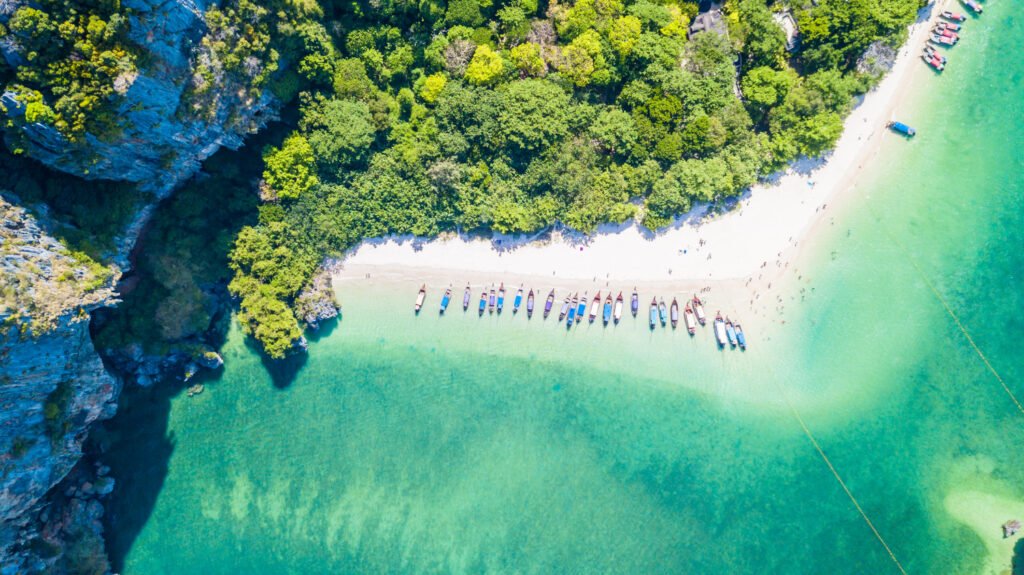
Worth separating out from Railay entirely because it earns it. Krabi’s Phra Nang Beach is regularly ranked among the most beautiful beaches in the world — a bold claim, but one that’s difficult to dispute when you’re standing on it. The limestone towers rise sheer from the water, the sand is fine and pale, and the sea is exactly the shade of turquoise that travel photography is accused of exaggerating. There is a famous cave at the far end of the beach, and long-tail boats pulled up on the sand add to the sense that you’ve arrived somewhere special. Get there before 10am and you may have it almost to yourself.
Khlong Hin Beach, Koh Kood — Trat
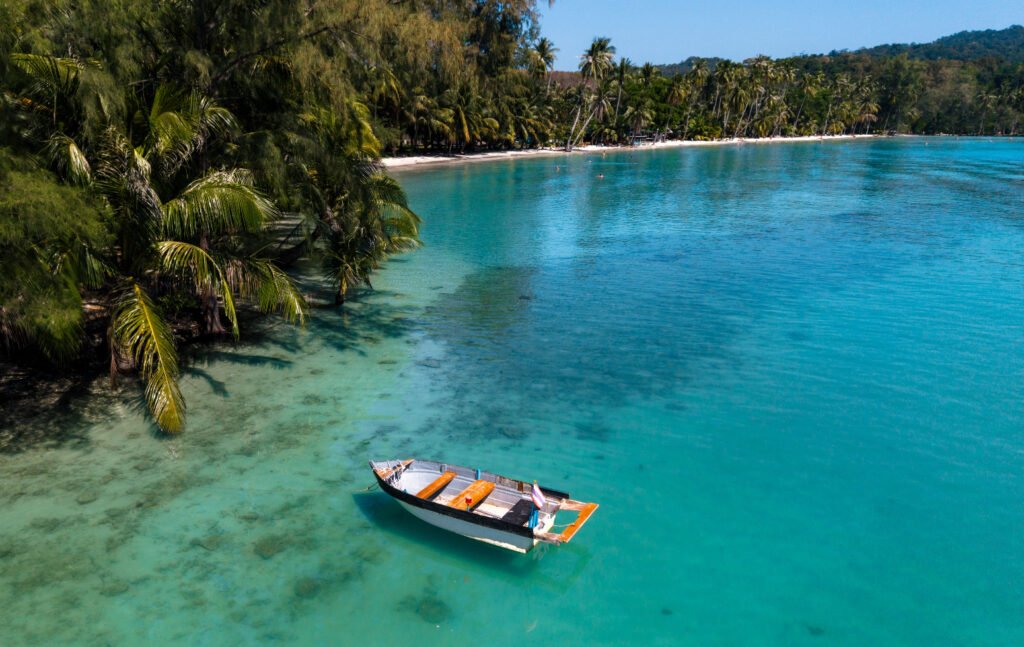
Koh Kood sits in the Gulf of Thailand near the Cambodian border and receives a fraction of the attention it deserves. Khlong Hin has a secluded, cut-off-from-civilisation quality that sets it apart even by Koh Kood’s unhurried standards. It is a stunning beach, where palm trees sway in the breeze, the sea is clear and blue, and the sands are clean and white. There are a handful of simple beachfront bungalows strung along the back of the bay — the kind of accommodation where waking up and walking directly onto a beautiful beach feels entirely normal. Koh Kood’s pristine beaches make an ideal backdrop for catching up on reading or taking a leisurely sunset stroll, though those seeking nightlife are better off elsewhere. This is precisely its appeal.
North Point Beach, Koh Lipe
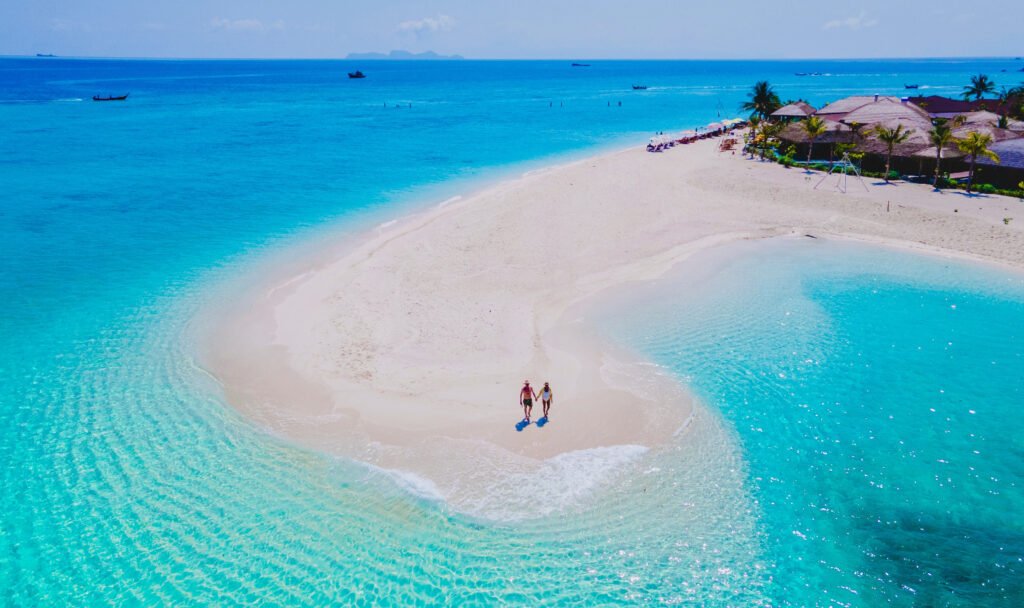
Koh Lipe sits near the Malaysian border at the southern tip of the Andaman Sea and has been quietly building a reputation as The Maldives of Thailand. North Point Beach still feels like an undiscovered pristine tropical paradise — turquoise waters, white sands, a relaxed atmosphere, and the kind of morning light that makes waking up early feel worthwhile. This quieter and smaller beach is just a short walk away from Pattaya Beach, Lipe’s busiest stretch, which spans 1.5 kilometres of exquisite white sand and clear water. The island has grown in popularity in recent years, but it still has a long way to go before it feels too crowded.
Koh Nang Yuan, near Koh Tao
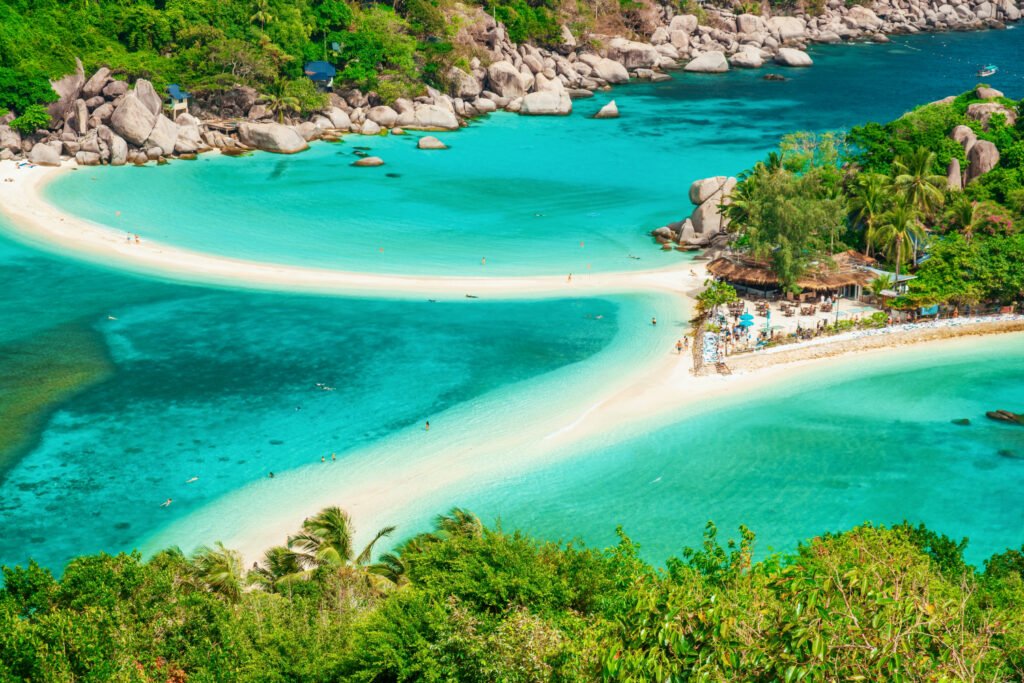
Just off the northwest coast of Koh Tao, Koh Nang Yuan is actually three tiny islands connected by sandbars. It’s the kind of place that looks unreal in photographs and even more so in person. The sandbar that connects the three lush islets makes it a snorkeller’s paradise, with impressive coral reefs just metres from the shore, and a hike to the viewpoint rewards visitors with one of the best panoramas in the Gulf of Thailand. The island is privately managed and charges an entry fee, which helps keep the crowds relatively contained. Day trips run regularly from Koh Tao. Go early, stay for lunch, and don’t rush the viewpoint.
Thong Nai Pan, Koh Phangan — Surat Thani
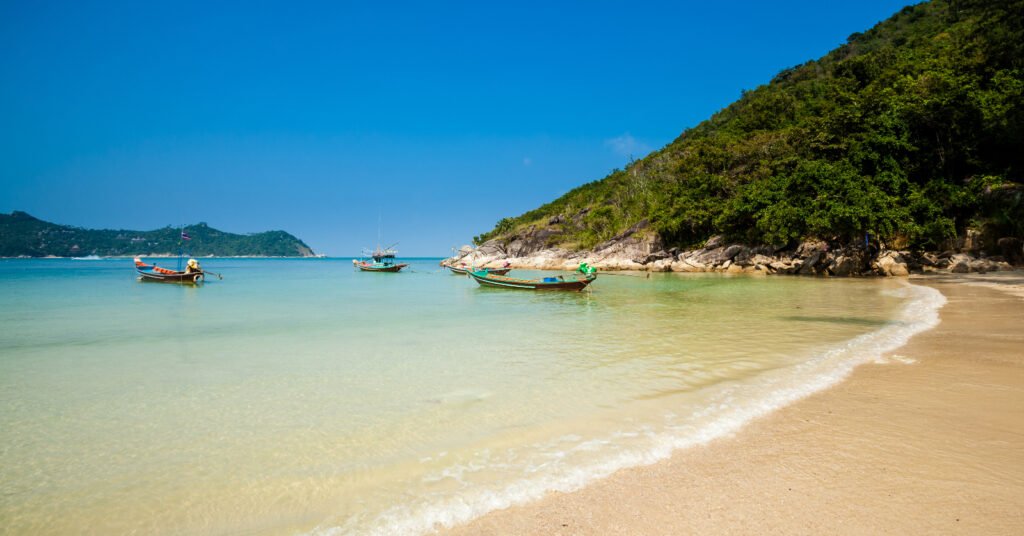
Koh Phangan is known globally for one thing — the Full Moon Party at Haad Rin — which does a disservice to the rest of the island. Haad Rin might be the best-known beach on Koh Phangan, but it isn’t the most beautiful. That title belongs to the much quieter Thong Nai Pan beaches on the northern side of the island. There are two adjacent bays here — Thong Nai Pan Yai (big) and Thong Nai Pan Noi (little) — both fringed with coconut palms, both blessed with gorgeous clear waters, and both blissfully removed from the noise of the island’s southern beaches. If you’re visiting Koh Phangan and skipping the Full Moon Party, this is where to base yourself.
Hong Beach, Koh Hong — Krabi
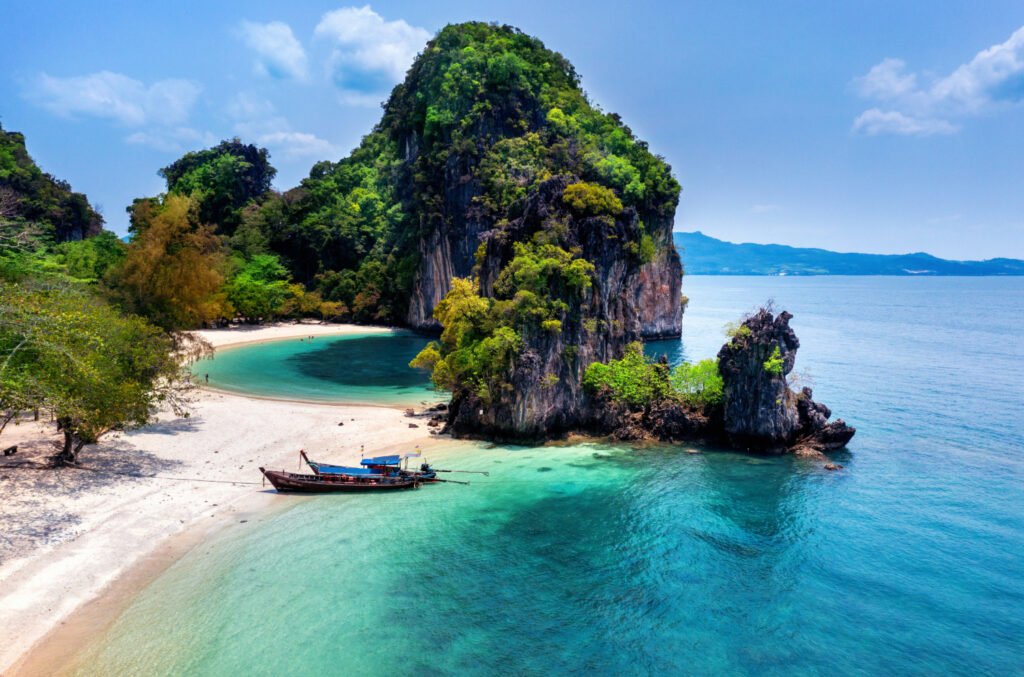
Looking for the Phi Phi experience without the Phi Phi crowds? Hong Beach – on tiny Koh Hong Island – is divided into two sections by a mighty limestone rock. The sand is fine and white, and the water is the kind of turquoise that invites both swimming and staring in equal measure. The Hong Islands are part of Than Bok Khorani National Park, meaning there is no development and less crowds than the Phi Phi Islands — a comparison that works firmly in their favour. The one caveat to enjoying this paradise in relative solitude: arrive early from nearby Ao Nang, before the longtail boats begin unloading their cargo of day-trippers. Arrive at midday and it’s a different story.
Sivalai Beach, Koh Mook — Trang
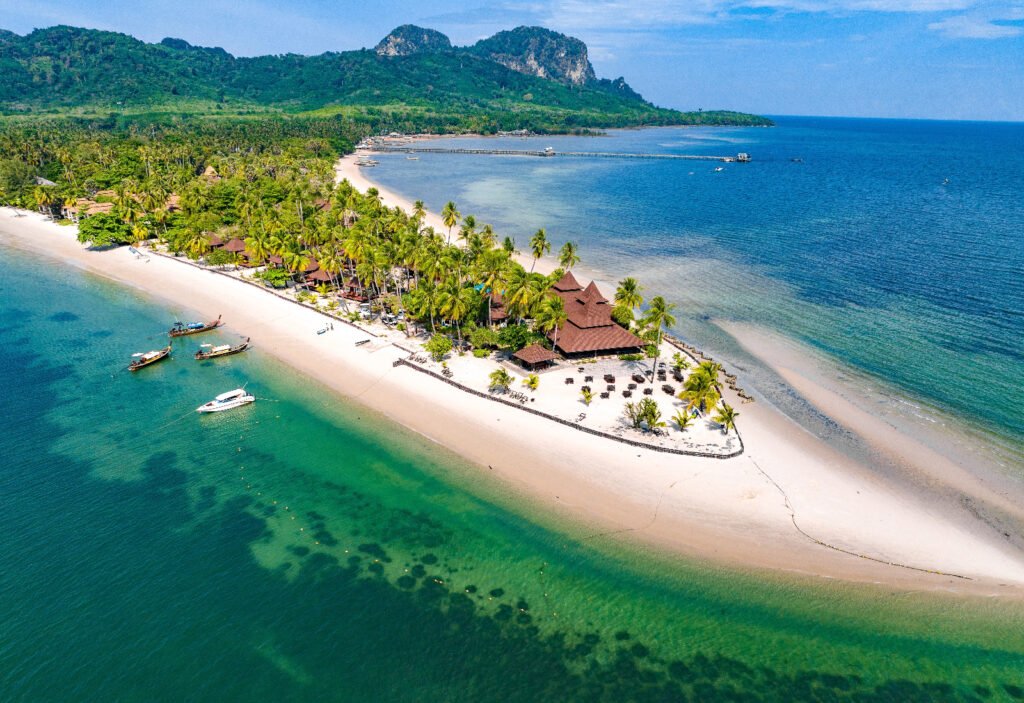
Sivalai Beach — also known as Had Laem Prao, or Pearl Beach — is a narrow white sand point that extends out into the sea, creating a picturesque sandbar that juts into the Andaman like a natural pier. The resort that sits on it occupies a stunning peninsula surrounded by crystal-clear water on both sides, giving the sense that you’re on a sliver of land that the sea hasn’t quite decided to reclaim yet. A caveat worth knowing: at low tide the water recedes considerably, making it less ideal for swimming — but this reveals shells, starfish and crabs in abundance, not to mention dreamy beach walks. The good news is that Sivalai Beach is open to all, regardless of where you’re staying.
Nui Beach, Koh Phi Phi Don — Krabi
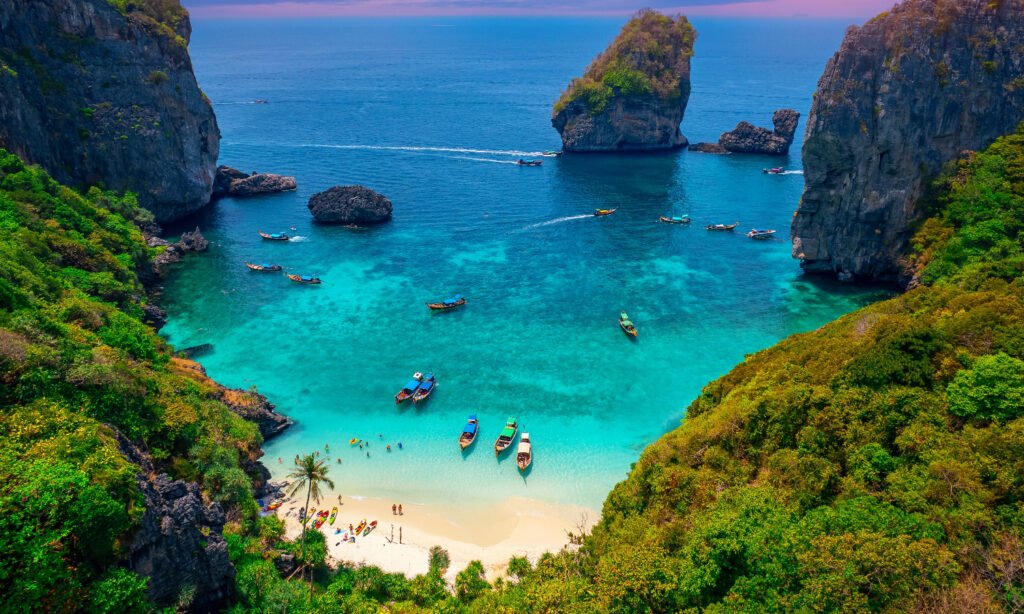
Koh Phi Phi Don is one of Thailand’s busiest islands, but Nui Beach operates at an entirely different pace to the chaos of Tonsai Bay. There are no bars here, no loud music, no fire shows — just a few people enjoying nature, which on Phi Phi feels something close to miraculous. Getting here keeps the crowds manageable: most take a five-to-ten minute longtail ride from Loh Dalum Bay, some arrive by kayak, or even by a challenging jungle hike through the island’s interior. In front of the beach, a limestone rock juts from the sea resembling a camel’s hump — known locally as Camel Rock — and the waters around it offer excellent snorkelling. Groups of tourists visit throughout the daylight hours, which makes early morning the best time to visit for those who appreciate peace and quiet.
Koh Ngam Beach, Koh Chang — Trat
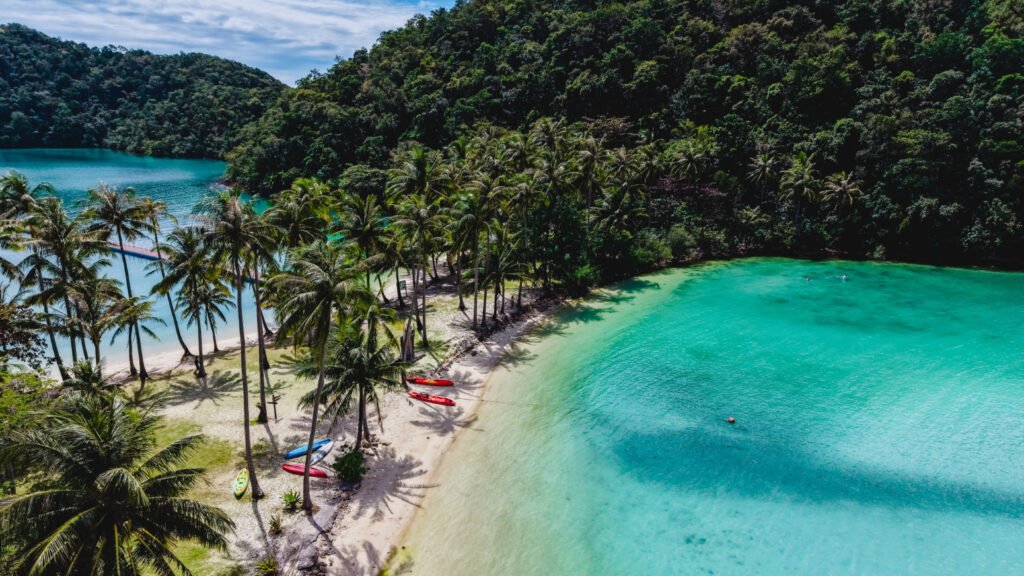
Often referred to as Koh Chang’s answer to Koh Phi Phi, the two peaks of nearby tiny Koh Ngam island are bridged by a palm-scattered sandy spit that delivers a dreamy tropical scene. Its beach – Koh Ngam Beach – is split into two sections by this narrow sandy strip. The south side is equipped with a floating pontoon, and the surrounding water is the kind of crystalline clarity that makes you want to get in immediately. Getting here is part of the experience — the island can only be reached by boat or kayak, with small boats available from Bang Bao pier and kayaks rentable from Long Beach – both on nearby Koh Chang. The kayak crossing takes around 30 minutes and is highly recommended over the boat — arriving under your own steam, with the island growing larger on the horizon, makes the whole thing feel considerably more earned. The island is a National Park, so an entry fee applies on arrival, collected by the rangers who are often your only company. There are no restaurants, no beach bars, and no vendors — just palm trees, white sand and the satisfying quiet of somewhere that isn’t easy to reach.
Bottle Beach, Koh Phangan — Surat Thani
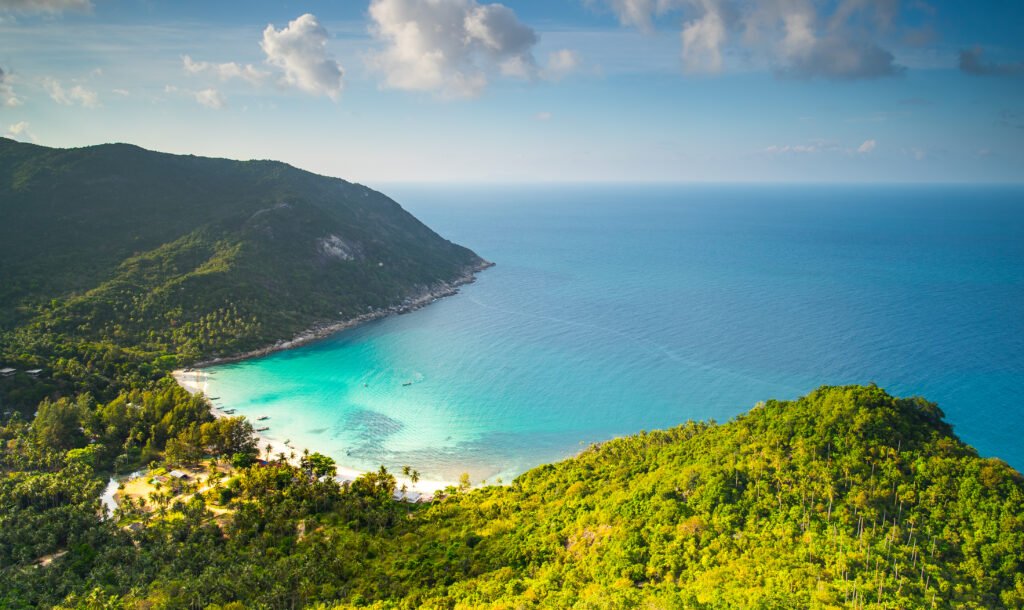
Accessible only by longtail boat or a steep jungle hike from the nearest road, Bottle Beach rewards the effort with a bay so sheltered and self-contained that it feels like its own small world. The water is calm almost year-round, the sand is clean and white, and there are a few simple bungalow operations for those who want to stay rather than just pass through. It has none of the development of the beaches further south on the island, and that is entirely the point. If Koh Phangan has a best-kept secret, this is it.
Maya Bay, Koh Phi Phi Leh – Krabi
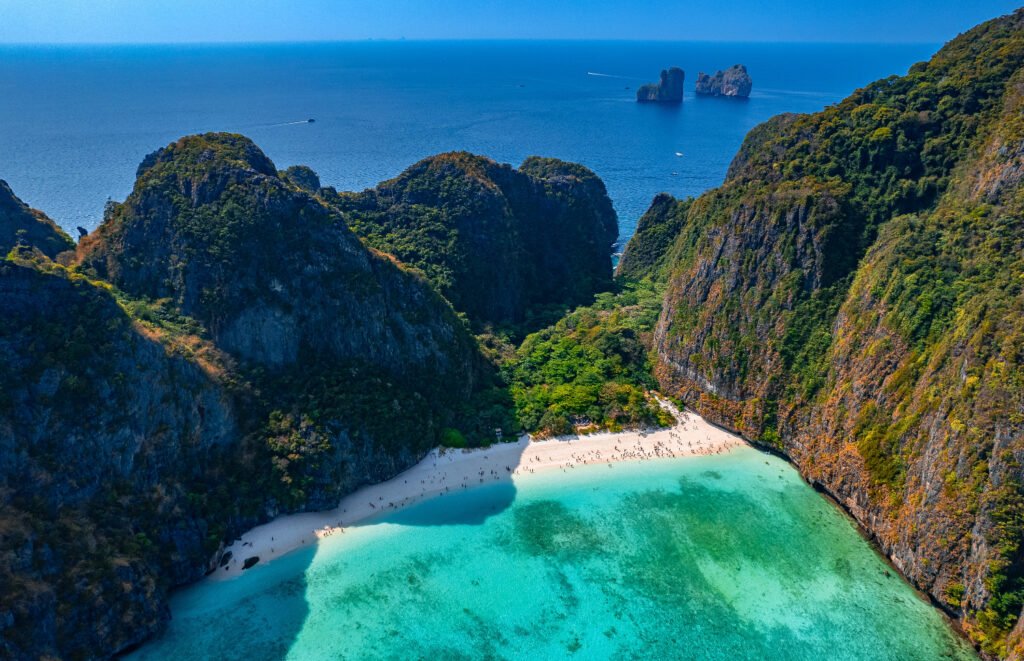
And last but not least, the one everyone knows. Maya Bay is often heralded as one of Thailand’s most sublime beaches — a curved bay of soft white sand framed by limestone karsts, with clear, sparkling water and dense jungle rising behind it. It was made famous by the Leonardo DiCaprio film The Beach and has been drawing visitors ever since. Yes, it gets crowded. Yes, the attention has taken its toll. Maya Bay now has a seasonal closure for two months each year — usually August and September — to give its wildlife a chance to recover. But arrive early on a quiet morning, and the beauty that made it famous can still be witnessed.
Timing Your Visit
Thailand’s two coastlines have different weather patterns, which makes planning tricky. The Andaman Coast — Krabi, Phuket, Satun, the Similans — is best visited between November and April, when the water is calm, clear and postcard-ready. The Gulf of Thailand side — Koh Samui, Koh Tao, Koh Phangan, Koh Chang, Koh Kood — has its best weather roughly between December and August, though this varies by island. The upside is that there’s almost always at least one of the most beautiful beaches in Thailand that’s in season.